Pace Notes, Roadbooks and Driving Blind: How Rally Navigation Actually Works
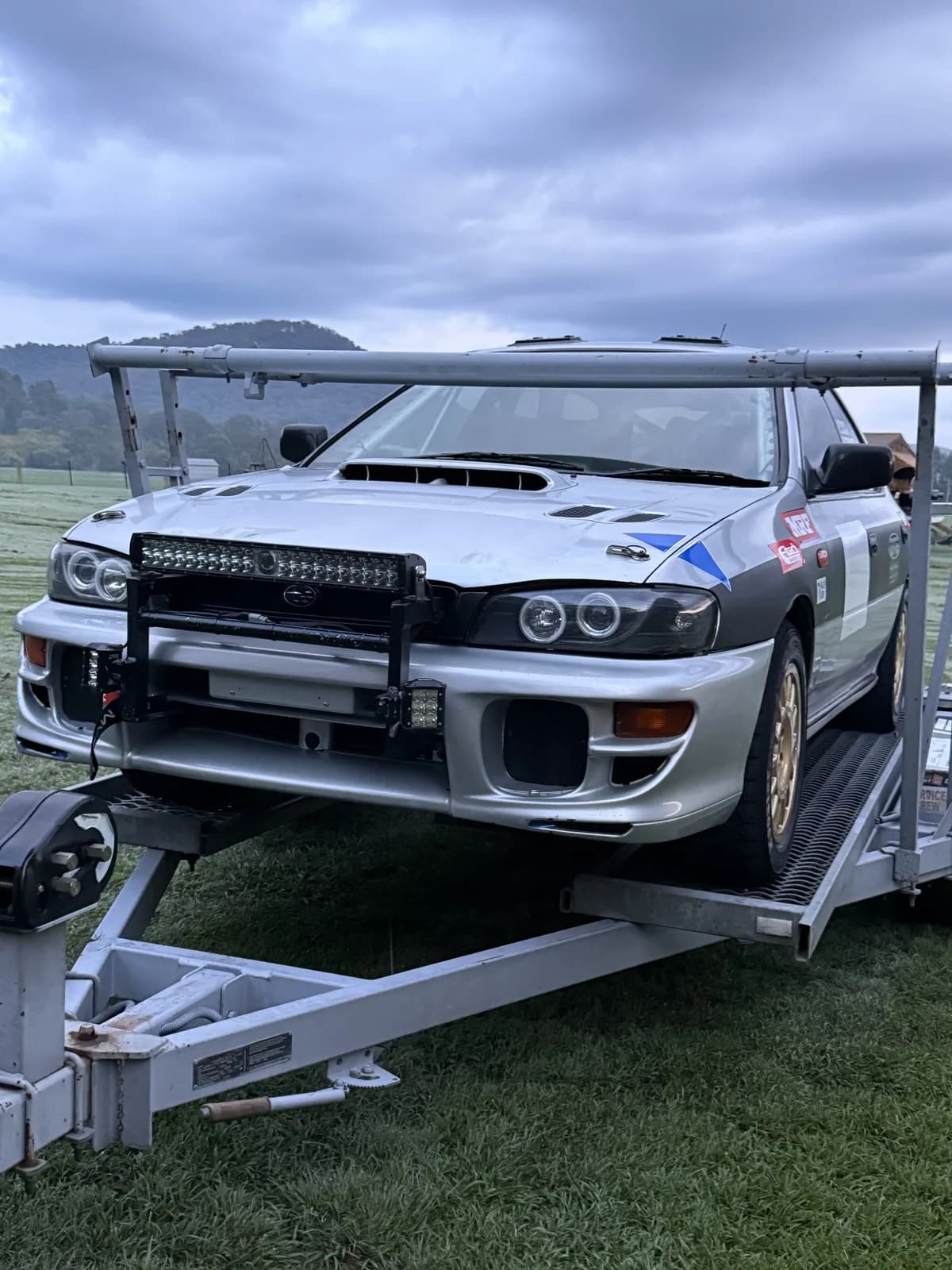
Our first gravel season has accidentally been a tour of every navigation format Australian rallying runs. Pacenoted events at Bathurst, Rally of the Bay and our ARC debut at Narooma. Blind, roadbook-navigated events at Mitta and the Rally of the Heartland, with the Ada River Rally — no recce, no notes at all — still to come. So here's the crash course we wish we'd had, from inside the car.
What pace notes actually are
Pace notes are a corner-by-corner script of the stage, read aloud by the co-driver a few seconds ahead of where the car actually is. Each call grades the corner's speed (most systems use numbers — a 6 is nearly flat, a 1 is barely above a hairpin), gives the distance to the next thing, and stacks on modifiers that matter: tightens, don't cut, crest, jump, keep in. What every number and call means has the full breakdown, with the system we use in the car.
The point isn't the system — crews argue about numbering conventions forever — it's that the driver commits to what's called rather than what they can see. On the fast, tree-lined roads at Rally of the Bay, rhythm and trust in the notes count for everything: by the time a blind crest reveals what's behind it, you're already set up for it, because your co-driver called it five seconds ago.
How notes get written
At state-championship level you'll often run notes supplied with the event — your co-driver's job is to learn them, mark them up, and deliver them at exactly the right moment. Step up to a round with a recce — like an ARC event — and crews drive the stages slowly before the rally, writing and refining notes corner by corner: the driver calls what they see, the co-driver writes and corrects, and a second pass confirms it. It's slow, deliberate work, and it's where the rally is half-won.
Narooma was our first go at it. After a season of supplied notes and blind rounds, SS1 there was our first-ever competitive stage on pace notes we'd written ourselves — and you can hear the difference bedding in across the weekend in our Narooma stage-by-stage onboards. The opening stage was cautious while we learned to trust our own calls; by the second pass through the same stages, the times came down. That's the recce paying rent.
And then there's driving blind
A blind rally deletes all of that. No pace notes, nobody calling corners. You get a roadbook — tulip diagrams and distances that keep you on the right roads — and past that, as Jenny put it at Mitta, you're just driving to what you can see. Which sounds fine, right up until you're carrying real speed into a corner you've never laid eyes on, with no idea if it tightens.
Mitta taught us what that costs. Following everyone else's tracks put us right on the racing line — and right onto a rock we never saw. The second rock we did see, and hit anyway. A good co-driver still earns their seat on a blind rally, though: on the Heartland's roadbook stages, having an experienced navigator on the book mattered more than usual, because keeping the car on the right road at 5:30 am is not nothing.
Which is harder?
Blind rallying is simpler and scarier; pacenoted rallying is more work and much faster. The real skill in both is the same one: the driver trusting the information — the notes, the roadbook, the co-driver — more than their own eyes. We're still learning that. The full stories are in the Mitta recap, the Heartland recap and the video above.