Bananas, No Lights and No 3rd Gear: Three Days at the Rally of the Heartland
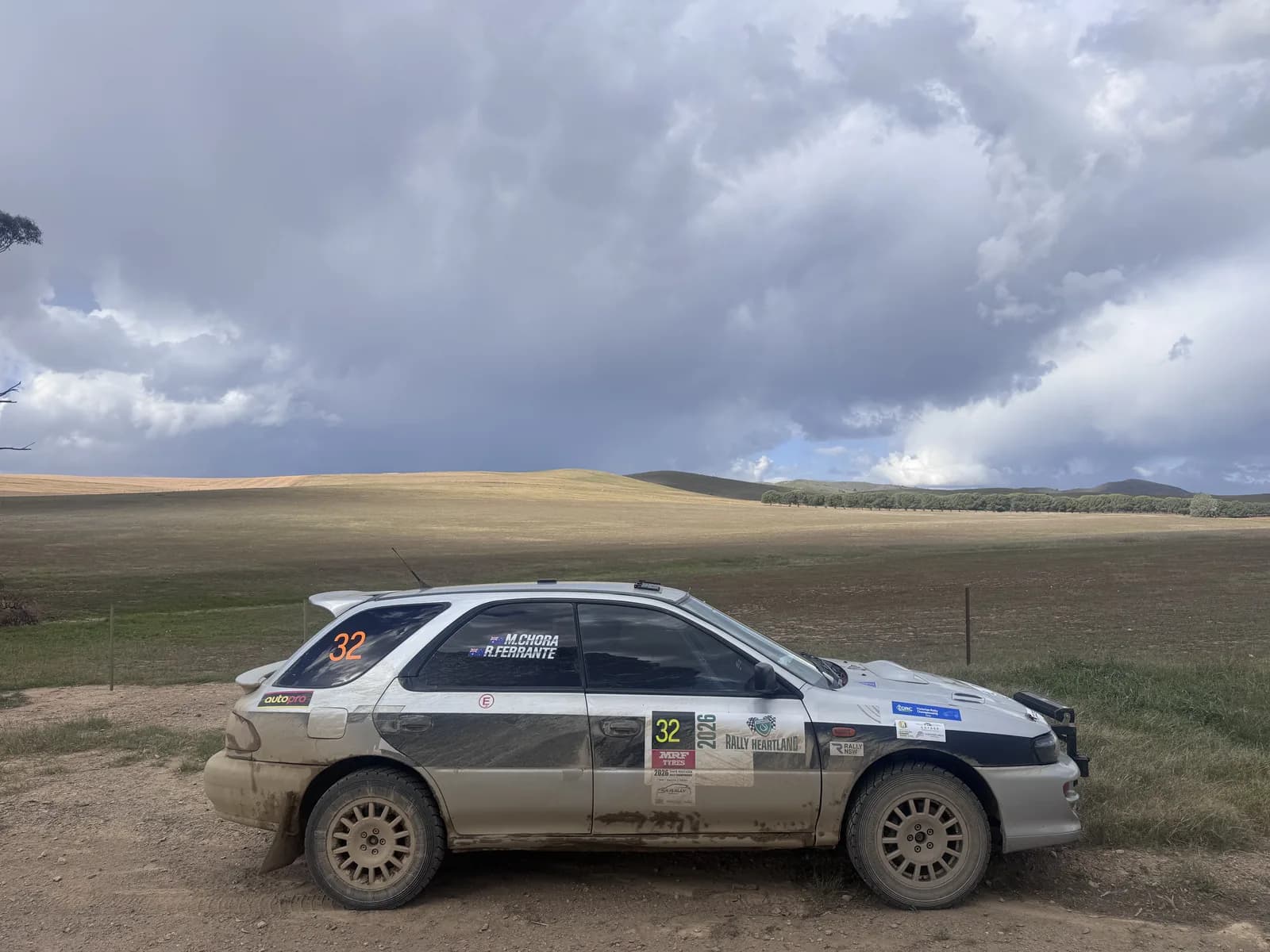
The Rally of the Heartland is a three-day blind rally in South Australia, which meant two things: a very long way to drive, and three days of not knowing what's around the next corner. Neither is really my idea of relaxing, but here we are.
Getting there was its own event — the better part of 16 hours from Sydney, so we broke it up: a big first day to Mildura, a night in a motel I'll describe only as "Z-beds and Domino's," then the rest of the way into the Clare Valley. Somewhere around 200 litres of diesel and one very long, very flat stretch of the Hay Plains later (highlight: emus), we made it. The one bit of real drama was the South Australian border — if you've never crossed it towing a rally car, the key fact is they really do not want your fruit. We had bananas. We no longer have bananas. Rachael flew into Adelaide to meet us and get back on the notes, which on a blind rally matters more than usual.
Day one: dinosaurs, Toby Price, and no lights
First surprise of day one was in the road book: someone had drawn a little dinosaur in it. I still have questions. Second surprise was Toby Price rolling out first car on the road in a red Evo — not bad company for a couple of gravel newbies. The stages were fast and open, and honestly the car felt the best it had all year — we'd changed the setup and for once it went where I pointed it and stayed straight. Most of the day was fourth and fifth, just enjoying it.
And then the sun went down. Doing a blind rally at speed is one thing. Doing it at night is another. Doing it at night when your lights quit right as you're about to start the stage is a whole new experience — and that's exactly what ours did. Equal parts terrifying and hilarious: me staring into the black going "I can't see, I can't see," catching flashes of road, just trying to keep it between the trees. We got through it, but it cost us three or four minutes.
Day two: gates, a hole, and a dying gearbox
Day two was more of everything — gates, a water tank to aim at, big rocks, and a hole I absolutely did not see until I was in it. Daily air-filter clean (air filters are cheap, engines are not), a brake bleed after some burnt fluid turned up in the calipers, a loose suspension bolt caught before it became a problem. Then night stages again, including a big 75 km one on a fuel gamble (our tank's only about 40 litres, so we chucked 20 more in and hoped). We were actually climbing — around seventh in class and about twentieth outright of everyone.
And then third gear died. If you read the Bathurst and Mitta posts, you'll know the gearbox was never happy. On day two it gave up third completely, and from there it made a noise best described as a jar of loose bolts being shaken. Full day still to go.
Day three: nursing it home
So day three was a survival mission: 330 km to cover, no third gear, one job — don't kill the gearbox before the finish. Be gentle, stay in fourth and fifth, get it done. It turned into a weird, lovely day. We ran stages in sunshine that we'd done in the dark the night before, which made them far less frightening. A butterfly flew into the car mid-stage. There were sheep on the road. We confirmed, for the record, that the car does over 200 km/h in a straight line — at which point it goes a bit ice-skatey and wanders across the road on its own. The last stage was in the rain, both of us basically talking to the gearbox the whole way: "hold together, buddy."
And it held.
The result
Eighth in the East Coast Classic — our best result of the year. Not eighth outright of everyone (there were faster modern cars out there), but eighth of the classic field — and given we'd lost third gear, driven a night stage with no lights, and surrendered our bananas at the border, we'll take it and then some. Three gravel events in, and this was the first one that felt like we actually belonged out there. Broken, blind and buggered — but there.
The finish-line scene at Burra Town Hall — podium, champagne and, fittingly, more rain:
From the event
Photos shot by our team.